
Surprisingly, accumulated grease accounts for about 40% of sewer blockages across some U.S. cities. One failing grease interceptor can halt a kitchen and spark expensive fines overnight. This guide is for business owners and facility managers in the United States. It explains grease trap replacement—when to act, what it costs, and how to keep kitchens compliant and free of odors. Grease traps—also called grease interceptors—separate fats, oils, and grease (FOG) from kitchen wastewater. That helps prevent sewer backups and environmental contamination.
This Site Is About Grease Trap Cleaning

Click Here For Grease Trap Pumping

Learn More About Grease Trap Pumping
You’ll learn practical signs that replacement is due. You’ll also understand when a repair is enough versus a full replacement. Correct grease trap installation and ongoing maintenance extend service life.
Prompt replacement protects daily operations, prevents health-code penalties, and limits bacterial growth and nasty odors. These issues harm reputation and property value. Bringing in a professional installer like Grease Cleaning Pros helps ensure correct sizing, efficient installation, regulatory compliance, and staff training afterward. That’s critical for restaurant grease trap replacement, where downtime quickly cuts into revenue.
The article ahead covers when to replace, replacement versus repair, cost estimation and financing, installation best practices and permits, maintenance routines, commercial-scale upgrades, and how to choose a qualified contractor for grease trap installation and upkeep.
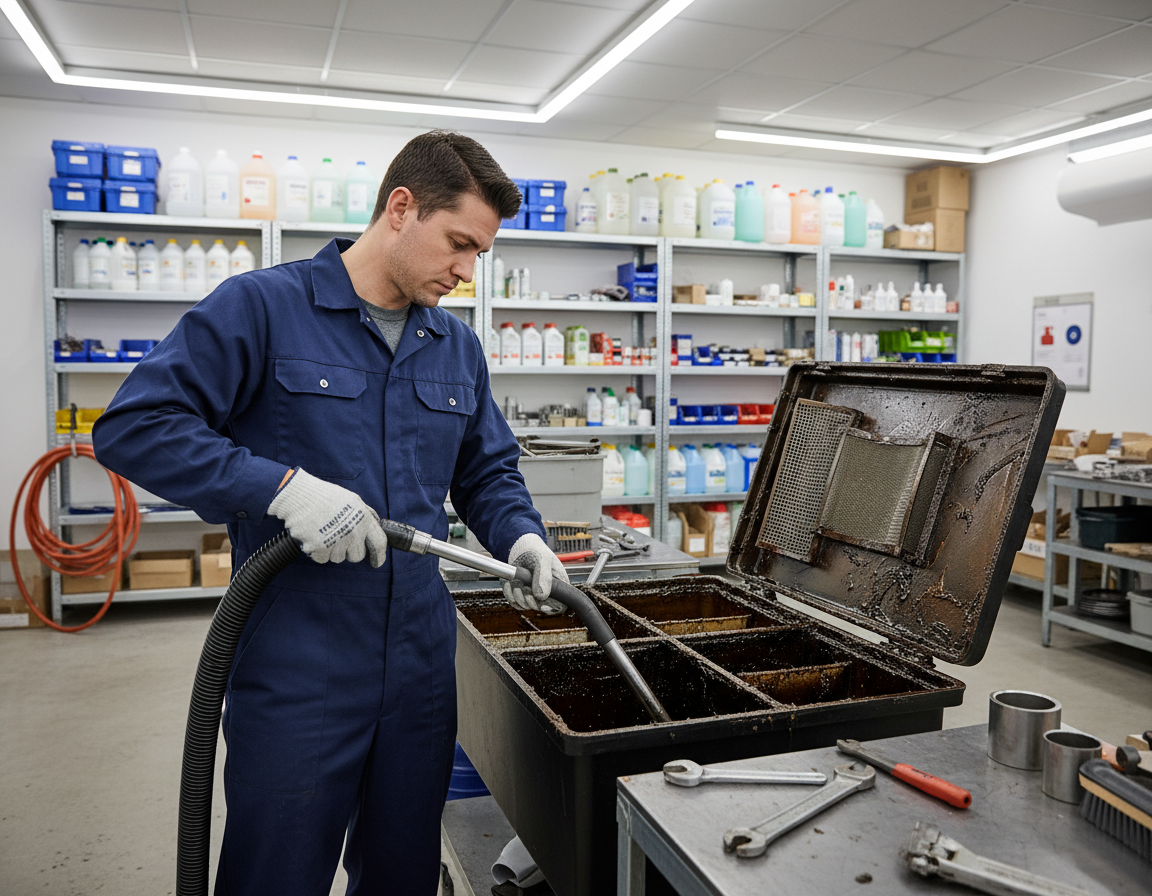
Key Takeaways
- Grease traps protect sewer systems by capturing FOG before it enters pipes.
- Replacing a grease trap at the right time helps stop fines, odors, and costly emergency repairs.
- Professional services such as Grease Cleaning Pros provide correct sizing and compliance.
- Plan for replacement when clogs, odors, or failed inspections become routine.
- Good grease trap maintenance and proper installation reduce long-term costs.
When You Should Consider Grease Trap Replacement
Deciding on a grease trap replacement means spotting key symptoms and reviewing your service history. Kitchens with high traffic or newly added equipment may need a bigger interceptor. Catching issues early saves money and helps prevent service interruptions.
Common red flags
Foul odors near drains or in the kitchen indicate trapped FOG and bacterial growth. Slow drainage or sinks taking longer to empty suggest partial blockages. Visible grease backing up into sinks or floor drains signals solids rising and immediate risk.
Check for obvious damage like cracks, corrosion, or leaks around joints and seals. Rust on metal often indicates structural failure. Frequent clogs or repeated pumping—even after cleaning—can signal the unit is at end of life.
Inspection and evaluation process
A grease trap inspection begins with a visual check of covers, baffles, and piping. Technicians measure grease and solids layer thickness and inspect for corrosion, cracks, and leaks. Service records are reviewed, including maintenance date, pumping frequency, and repair notes.
Next comes a flow and capacity evaluation. Matching current discharge to the trap’s rated capacity helps confirm if the unit is undersized. Professionals use scopes, cameras, and depth gauges to confirm internal condition. Companies such as Grease Cleaning Pros advise repair vs. replacement based on age, structural integrity, and performance.
Costs of delaying replacement
Putting off replacement raises the risk of major sewer backups, emergency plumbing bills, and health-department fines. These can force temporary closures. Small temporary fixes often become recurring expenses, exceeding the cost of a new installation.
Downtime from emergency repairs hurts service quality and revenue. Environmental penalties and liability risks rise if FOG enters municipal systems. Case studies show proactive maintenance and timely replacement reduce emergency calls and long-term repair spend.
| Sign or Issue | Immediate Action | Long-Term Plan |
|---|---|---|
| Persistent odors | Schedule grease trap cleaning and odor treatment | Complete a grease trap inspection; plan replacement if it continues |
| Sluggish drainage | Clear blockages and monitor flow | Check capacity; consider a larger unit or replacement |
| Visible backups into drains | Perform urgent pumping and cleanup | Check for damage and replace if the problem repeats |
| Corrosion or cracks | Control leaks and limit system use | Replace the unit to avoid structural failure and penalties |
| Ongoing clogs even after cleaning | Temporarily increase cleaning frequency | Assess for repair vs. replacement with Grease Cleaning Pros |
Grease Trap Replacement Guide
Choosing repair versus replacement comes down to a careful evaluation. Factors such as age, damage, and service history are critical. Often, opting for replacement over repair can lead to significant long-term savings. That’s because it prevents recurring failures and downtime.
Replacement Versus Repair Decision Factors
Age is a significant factor. Units older than ten years often show corrosion and wear that impacts reliability.
Damage severity is another key consideration. Leaks, cracks, collapsed components, or heavy corrosion typically indicate a need for replacement, not repair.
How often it fails is also important. Repeated clogs or service calls suggest that replacement is necessary to ensure consistent flow.
Do a cost analysis. Compare the cumulative cost of repairs to the upfront cost of replacement, including lower maintenance costs over time.
Make sure the trap’s capacity matches current operations. An undersized trap leads to overflows and code violations, necessitating replacement.
Types Of Replacement Solutions
Passive grease traps are affordable and straightforward. They are suitable for low-volume kitchens but require more frequent cleaning.
Automatic Grease Removal Units (AGRUs) mechanically remove grease. They are ideal for high-volume kitchens, reducing manual labor and maintaining cleaner waste lines.
Grease interceptors, including large in-ground units, are necessary for restaurants and institutions with high flow rates. Local codes often mandate these for large operations.
Biodigesters and biological additives help break down FOG, extending time between cleanings when used with physical traps.
Material selection influences both cost and service life. Choices include concrete, stainless steel, and polyethylene—each with distinct durability and installation requirements.
Typical Grease Trap Replacement Workflow
First, a technician evaluates the site and provides a detailed quote. Grease Cleaning Pros provides transparent quotes and clear options.
Then, select the proper trap type, material, and capacity based on kitchen volume, equipment, and local requirements.
Then, obtain permits as needed and schedule work to reduce downtime for the kitchen.
Remove the old unit, pump out the waste, and prep the site as required.
Install the new unit, connect piping, and ensure proper slope and venting.
Test the system, checking for leaks and verifying flow rates and grease separation performance.
Provide staff training, maintenance schedules, and log templates. Grease Cleaning Pros stresses post-install training and follow-up planning as essential.
Estimating Grease Trap Replacement Costs And Financing
Replacing a grease trap is more than just the cost of the unit. It’s about understanding the total cost, including equipment, labor, disposal, permits, and ongoing service. Grease Cleaning Pros suggest getting detailed estimates to compare the upfront cost with long-term value.
Key cost drivers
The size and rated GPM of the unit significantly impact the cost. Larger units require more equipment and labor, increasing the overall expense. The choice of material also plays a role, with concrete and AGRU systems being more expensive than plastic or stainless units.
Installation complexity is another factor. Excavation, plumbing reroutes, or tight-access work can significantly increase labor costs. Local permits and inspections add both cost and time.
Waste removal is a major cost factor. Proper disposal of fats, oils, and grease (FOG) must be considered. Difficult access can raise pumping costs and installation costs.
Typical price ranges
Small passive replacements for low-flow kitchens often run $1,500 to $3,000 with basic installation. Mid-range units and many underground interceptors usually fall between $3,000 and $7,000 depending on materials and site work.
Large-capacity interceptors or AGRU installations for high-volume kitchens often start near $5,000 and can exceed $10,000 when excavation and extensive site work are required. Installation-only services may be several hundred to several thousand dollars.
Expect recurring costs. Busy kitchens often need scheduled pump-outs every one to three months. Grease trap pumping rates vary by region and provider.
Financing and budgeting strategies
Request clear, itemized quotes from contractors such as Grease Cleaning Pros. Weigh lifetime operating costs against the upfront investment to choose wisely. Maintenance contracts covering pumping and emergency response can help level out operating budgets.
Look into short-term financing, business credit lines, or vendor payment plans for grease interceptor work. Some suppliers offer phased payment options to ease cash-flow strain.
Maintain records for maintenance, receipts, and permits. Good documentation supports municipal compliance and can help pursue rebates or incentive programs. Budgeting for routine care extends unit life and lowers total cost of ownership.
| Item | Typical Cost Range (USD) | Notes |
|---|---|---|
| Small passive unit + basic installation | \$1,500–\$3,000 | Suitable for low-flow kitchens; usually requires minimal site work |
| Mid-range interceptor, including underground options | \$3,000 – \$7,000 | Material and complexity drive price; may need moderate excavation |
| Large interceptor or AGRU system | \$5,000–\$10,000+ | Designed for high-volume kitchens; concrete in-ground units usually cost more |
| Installation-only: labor, plumbing, permits | \$500 – \$4,000+ | Varies by access, reroutes, and local code requirements |
| Grease trap pumping (per service) | About \$100 to \$500+ | Frequency depends on kitchen volume; pricing varies regionally |
| Annual service contract | About \$600 to \$3,000+ | Typically includes pumping, inspections, and priority response |
| Financing options | Varies by provider | Vendor plans, lines of credit, and short-term loans available for financing grease interceptor projects |
Grease Trap Installation Best Practices And Code Compliance
Proper installation is critical to long service life, strong performance, and compliance. Following established best practices helps prevent backups, fines, and expensive repairs.
Correct Sizing And Selection
Begin by measuring peak wastewater flow and factoring in hours of operation and equipment type. Follow local code requirements to ensure correct capacity. An undersized unit will overflow quickly.
Pick the right system for your facility. Passive traps are a fit for low-volume kitchens. For high-volume operations, consider an automatic grease removal unit or a commercial interceptor. Select materials based on corrosion resistance and site demands. Stainless steel and concrete are popular for their durability in commercial settings.
Installation Checklist
First, evaluate the site for drain flow rates, structural capacity, and maintenance access. Ensure safe removal and disposal of existing FOG before installing a new unit.
- Placement: ensure equipment clearance and easy access for maintenance.
- Piping and slope: use correct piping with proper slope, venting, and backflow protection.
- Seals and covers: use secure baffles, non-slip covers, gaskets, and seals to stop leaks and odors.
- Testing: run pressure and water-flow tests to confirm leak-free connections and proper flow.
- Documentation: record installation details/serial numbers and provide a maintenance log template plus basic staff training on operation and safety.
Local Regulations And Permitting
Many municipalities require grease interceptors and regular maintenance documentation. Health departments and public works agencies enforce these regulations to protect sewer infrastructure.
Secure required permits for new installations, in-ground interceptors, or major plumbing changes. Expect inspections after installation. Ensure pumped grease is disposed of according to local waste-handling rules. Companies like Grease Cleaning Pros offer compliant removal and disposal services.
Maintain detailed service records and pumping logs to show compliance during inspections. Failure to comply with local regulations can result in fines or shutdowns. Maintain solid documentation and follow best practices throughout.
Grease Trap Maintenance To Extend Lifespan
Keeping equipment in good condition helps prevent expensive repairs. Routine maintenance prevents backups, reduces odor complaints, and extends grease trap life. A straightforward plan that blends routine cleaning, good kitchen habits, and targeted treatments produces the best results.
Recommended Cleaning Frequency
Cleaning frequency varies with kitchen activity levels. Many kitchens schedule cleaning every one to three months. Busy restaurants might need monthly service, while smaller cafes and delis can manage with quarterly cleanings.
Check the grease and solids layer regularly and schedule service before it hits maximum capacity. Use a certified professional for thorough removal and compliant waste disposal. Grease Cleaning Pros suggests maintaining pumping schedules and logs to support inspections and waste manifests.
Daily Operational Best Practices
Train staff to scrape plates and collect cooking oil and solids in designated containers. Never dump large amounts of oil down sinks. Use sink strainers and floor-drain screens to catch debris before it reaches the interceptor.
Skip hot-water flushing; it can liquefy grease and move it past the trap, leading to blockages. Conduct short daily checks for odors, slow drains, or visible buildup. Write these findings into a log so you can follow up quickly.
Using Biological Treatments And Monitoring
Biological treatments—such as enzyme and bacterial products—help break down FOG. They may extend time between mechanical cleanings. Apply products according to directions, commonly weekly. Use them as a supplement, not a replacement, for scheduled cleanings and pumping.
Establish a monitoring routine: measure grease depth, log treatment dates, and track the pumping schedule. Monitoring data helps fine-tune service intervals and reduces emergency calls, lowering yearly maintenance costs.
Commercial Considerations For Large Operations
Large restaurants, hotels, and food-production facilities face unique demands for grease management. Upgrading equipment and service plans can reduce downtime. That helps ensure compliance with local rules and protects plumbing systems from expensive backups.
When peak flow exceeds small-trap capacity, upgrading to heavy-duty interceptors or AGRUs is a smart move. In-ground grease interceptors are built to handle large volumes. AGRU installation delivers automation, cuts manual labor, and keeps kitchens operating during busy periods.
Upgrading To Commercial Interceptors Or AGRUs
Choose materials for longevity: concrete interceptors suit rugged, high-volume sites. Stainless steel AGRUs provide mechanical reliability and faster service access. Correct sizing reduces pump-out frequency and meets municipal compliance requirements.
Maintenance Contracts And Emergency Response
Maintenance contracts provide scheduled pump-outs, inspections, documentation, and priority emergency response. Clear response-time commitments and fixed emergency pricing help reduce unexpected downtime. This helps stabilize operating costs.
Grease Cleaning Pros and many established third-party providers offer 24/7 emergency service. This support reduces business disruption and limits health hazards. A good contract includes service logs that can support insurance claims and municipal inspections.
Case Study And Cost Savings Example
A busy bistro moved to monthly maintenance, staff training, and a properly sized interceptor. The owner reduced plumbing service calls by 80%. This saved roughly $5,000 annually by reducing repair needs and labor costs.
Higher upfront spend on AGRU installation or a properly sized interceptor often returns value. You benefit from fewer service calls, reduced fines, and extended equipment life. Routine grease interceptor service plus a maintenance contract creates predictable budgeting and stronger operational resilience.
Choosing A Professional: Grease Cleaning Pros And What To Expect
Choosing Grease Cleaning Pros means getting access to trained technicians and full-service support for your commercial kitchen. They offer a range of services, including grease trap replacement, pumping, and repair, alongside regular cleaning. This experience helps minimize downtime and keeps your operations aligned with local FOG rules.
Your first step is an initial consultation covering the trap’s size, location, and last service date. After that, technicians complete an on-site inspection. They’ll pump the grease trap, check for corrosion or leaks, and suggest repairs or replacements. You’ll get an itemized quote that covers trap sizing, installation complexity, permits, and disposal.
A professional install typically includes removal of the old unit, site preparation, and installation of the new interceptor or AGRU. They’ll handle piping, testing, and commissioning. Post-service, Grease Cleaning Pros supplies documentation, a maintenance plan, and training on daily habits that extend equipment life.
Expect 24/7 emergency response and compliant disposal of collected FOG. Optional maintenance contracts are available, including scheduled pump-outs and priority service. For restaurants and large operations dealing with frequent grease issues or regulatory risk, it’s wise to engage Grease Cleaning Pros for an assessment and clear estimates. This helps protect your business and reduces long-term costs.
Related: Most Recommended Grease Trap Cleaning Company for Preventing Backups