April 21, 2026

Decatur TX Brush Mulching Services For Large And Small Properties

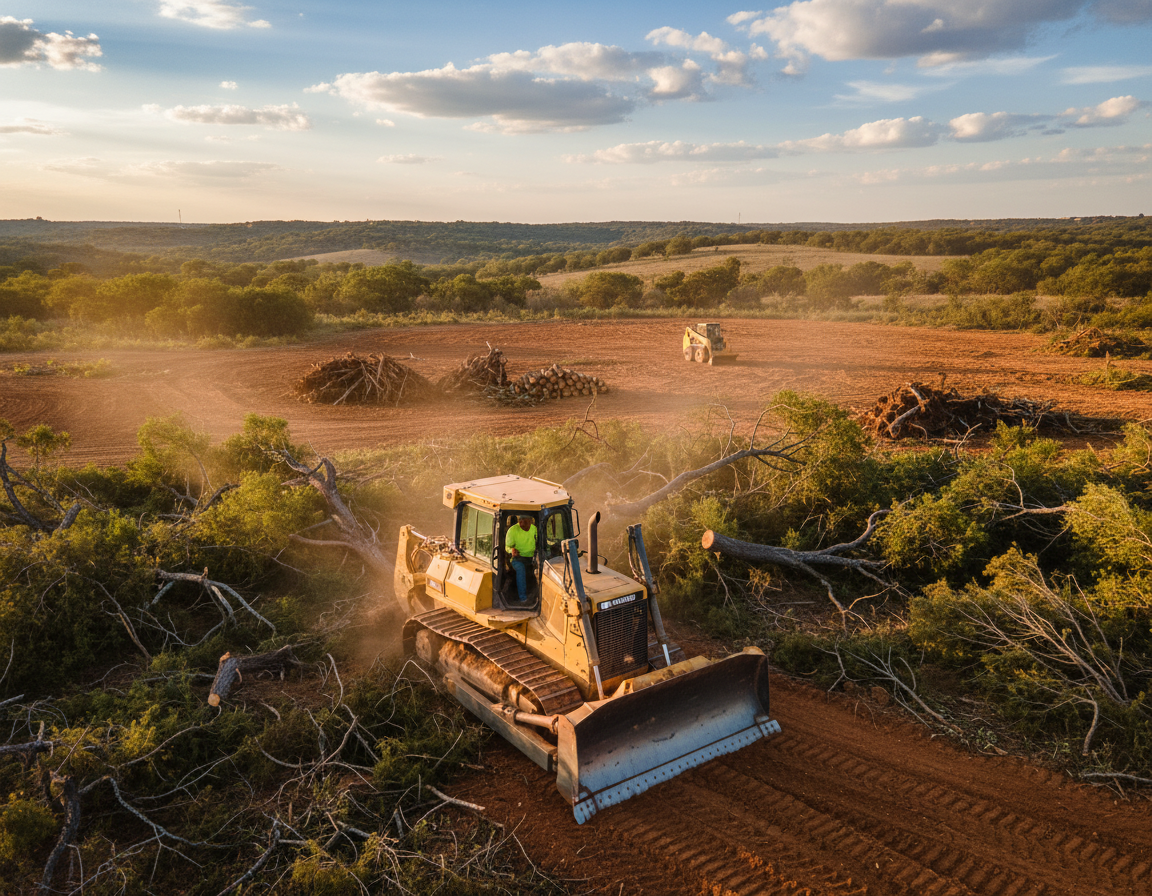
Last spring, a Decatur rancher reached out to Bronco Land Clearing after a storm created a heavy tangle of oak saplings and dense brush across a future building site. That trusted forestry mulching company in Decatur acted fast to clear the access lane, grind the stumps, and leave behind a layer of nutrient-rich mulch.

More information about Land Clearing Decatur TX
That kind of fast turnaround is exactly what many property owners expect from Decatur land clearing services. Whether the goal is construction, pasture improvement, recreation, or ecological restoration, Bronco Land Clearing is prepared to help. The team uses heavy equipment and local expertise to remove trees, shrubs, and stumps while minimizing erosion and avoiding burn methods.

Across Decatur, professional forestry mulching and land clearing typically emphasize sustainable practices that help the ground hold moisture and improve soil quality. The work can include vegetation removal, grubbing, stump extraction, debris cleanup, and full site preparation. Depending on density and site conditions, local crews may clear roughly 2 to 5 acres per day.

Whether you are a homeowner, landowner, rancher, developer, municipality, or conservation-minded property manager, Bronco Land Clearing is ready to assist. They provide on-site assessments and quotes tailored to the needs of each project. Visit Bronco Land Clearing for more details and to request a site assessment.

Why Professional Land Clearing And Forestry Mulching Matter In Decatur

Decatur’s terrain, soils, and plant species shape every land clearing project in different ways. A local team is better prepared to secure permits, preserve important trees, and control cedar encroachment with fewer complications. This familiarity with regional rules can help avoid costly setbacks and keep projects moving.

Advantages Of Working With A Local Specialist

Local professionals develop site-specific plans based on Decatur’s slopes, soils, and vegetation patterns. They often use tracked machines and high-horsepower mulchers that help keep production efficient and consistent.

Hiring a local contractor often reduces travel delays and keeps machinery support more accessible. This approach can limit disturbance around the site while helping projects move faster for residential, agricultural, and commercial customers.

Practical And Environmental Benefits Of Forestry Mulching

With forestry mulching, brush and small trees are processed into an organic layer that supports moisture retention and erosion control. This method reduces the need for hauling and burning while supporting healthier future vegetation management.

For many Decatur properties, mulching strengthens defensibility by cutting fuel ladders and forming clearer firebreak zones. Professionals may coordinate with agencies such as NRCS and LCRA to stay aligned with conservation and floodplain requirements.
Land Clearing Decatur TX

Who Benefits From Professional Services

Homeowners can gain clear, graded lots while preserving specimen trees around future build sites. Ranchers and farmers commonly use these services to improve access, expand usable pasture, and clear fence lines.

Commercial developers and municipalities often need scalable crews that can manage large, multi-phase projects. Conservation organizations appreciate land clearing and forestry mulching in Decatur when it is paired with sound restoration methods and erosion control practices.

Land Clearing And Forestry Mulching Decatur

Preparing land in Decatur for construction, agriculture, recreation, or restoration requires the right process and equipment. Area contractors rely on multiple clearing methods to remove trees, cedar, shrubs, and persistent root systems so land is ready for development, grazing, or recreation. Solutions may include everything from minimal mulching to aggressive clear-and-grub work for stubborn plants like mesquite and yaupon.

What Land Clearing In Decatur Entails

A typical land clearing project in Decatur includes tree removal, stump grinding, and the clearing of brush and undergrowth to make land more usable. Contractors usually assess the soil, grade, and plant density before deciding on the right approach. The project often ends with grading so foundations, roads, and pads have a stable surface.

How Forestry Mulching Works And What It Produces

In Decatur, forestry mulching is performed with high-powered mulchers or skid-steer heads that process vegetation into a ground cover layer. That mulch layer can reduce erosion, preserve moisture, and lower disposal costs because the organic material stays on the property. It also allows for immediate seeding and often leaves behind a neat, park-like finish.

For more demanding terrain or vegetation, contractors may use dozers or excavators for full clear-and-grub work. Rock milling or crushing is another option when the site contains heavy stone. Output depends heavily on equipment size, as 350 to 400+ HP mulchers may handle 2 to 5 acres daily, while compact skid-steer units are usually best for smaller residential sites of around half an acre to one acre.

Common Land Clearing Services Available In Decatur

Property owners in Decatur often have access to a wide range of land clearing solutions. Common offerings include tree removal, stump grinding, brush clearing, vacant lot clearing, fence-line work, right-of-way clearing, and firebreak creation.

Many contractors also provide supporting services tied to long-term land management in Decatur. Those services can include restoration work, grading, excavation, pond or lake construction, and rock milling or crushing for rocky ground. Every project can be customized to fit agricultural needs, development plans, recreational use, or wildfire reduction objectives.

Service Common Method Used Typical Result
Removal of trees Cut down, then mulched or hauled away More open canopy for construction or access
Stump grinding Mobile stump grinder Level site ready for construction
Brush and underbrush removal in Decatur Forestry mulcher or skid-steer Improved access and lower fire risk
Clear-and-grub for tap-root species Dozer or excavator Removed roots to prevent regrowth
Rock milling and crushing Dedicated rock milling equipment Rocky lots made more workable for development
Grading and excavation Bulldozers and excavators Foundation-ready terrain

Equipment And Capacity For Decatur Land Clearing Services

Land clearing in Decatur requires the right combination of machinery for the size and conditions of the property. Many crews pair heavy equipment with compact units so they can work efficiently while protecting buildings, fences, and sensitive areas. This balance helps speed up production while still safeguarding the site.

Equipment Commonly Used On Decatur Projects

For large-acreage jobs, high-horsepower mulchers in the 350 to 400+ HP range are often preferred. They can move through thick brush rapidly while producing a finer mulch finish. By contrast, skid-steer mulching is better suited to tight spaces and sensitive areas because it reduces ground impact and protects nearby structures.

Dozers and excavators are commonly used for clear-and-grub work, stump removal, and basic grading. For rocky sites, contractors may use dedicated rock milling machines to pulverize stone and create a more workable surface while reducing hauling needs.

Productivity And Scale

Production rates depend on terrain, vegetation density, and the machinery selected. High-horsepower mulchers may clear 2 to 5 acres per day under normal conditions, while skid-steer units often clear around 0.5 to 1 acre per day in tighter settings.

Rock milling equipment can often mill to a depth of roughly 6 inches, and daily output may range from about half an acre upward based on the amount and consistency of the rock. Choosing the right machine mix can reduce both timeline pressure and overall project cost.

How Crews Protect The Site And Work Safely

Professional crews work within local safety expectations and often use measures like silt fencing and controlled surface prep to limit erosion. They also preserve heritage trees when possible by protecting root zones and using lower-impact skid-steer mulching methods.

If a site contains large boulders, crews may switch to excavators or rock breakers for safe removal. While that can reduce the pace of work, it improves safety and helps maintain control over the site. Contractors offering Decatur land excavation services often handle permits, staged work plans, and erosion control to reduce habitat disruption and protect the property.

Services Breakdown: Tree Removal, Brush Clearing, And Site Prep In Decatur

Land work in Decatur can range from small residential lots to major commercial and agricultural properties. This section outlines common services, likely machine output, and specialty options that support full site preparation.

Residential projects

On smaller residential lots, skid-steer mulchers are often the preferred option because they can work efficiently while limiting site disruption. These machines usually clear about 0.5 to 1 acre per day and leave mulch that can support grass growth while reducing erosion. Residential services often include tree removal, stump grinding, and grading for foundation-ready pads.

Commercial and larger-acre projects

Larger sites usually rely on high-horsepower forestry mulching equipment to clear right-of-way corridors and prepare development pads. Machines operating at this level may clear 2 to 5 acres per day, making them cost-effective on bigger parcels. These projects often include final grading, erosion-control measures, and finished surfaces ready for seeding or building.

Specialty and earthwork services

Rock-heavy lots may need milling or crushing so the stone can be broken down and incorporated into the site. The process commonly works 4 to 6 inches deep and blends crushed rock back into the soil. Dozer and excavator earthwork may also support pond construction, basin layout, and excavation tasks.

Fire mitigation and protective work

Defensible-space work and understory fuel reduction are often planned with NRCS and LCRA guidance in mind. Firebreaks can help lower wildfire risk near structures, pasture areas, and travel corridors. Decatur brush-clearing teams commonly target heavy fuel buildup and dense understory to improve property protection.

Final access and finishing work

Opening fence lines, clearing driveways, improving roads, and removing debris can all make a property more usable and reduce pest pressure. Residential land clearing in Decatur often ends with clean, graded surfaces ready for builders, landscapers, or immediate use.

Comparison of common outputs

Service Common Equipment Typical Daily Output Main Result
Compact skid-steer mulching Skid-steer mulcher (compact) About 0.5 to 1 acre Fine mulch, rapid regrowth control
Large-scale forestry mulching Tracked mulchers, heavy tractors Roughly 2 to 5 acres Cleared development pad, low cost/acre
Rock milling/crushing Rock mill, crusher Varies by rock density Crushed rock tilling into soil
Earthwork with dozers and excavators Dozers, excavators Site-dependent Pond construction Decatur; basins and grading
Clear-and-grub operations Excavator and forestry mulcher Varies Deep-root removal that helps reduce regrowth

Each project is usually built around a combination of services that fit both the goal and the budget. A home site might need residential clearing, tree removal, and grading, while a ranch or commercial property may require road clearing, broader site prep, and pond construction for water management.

Decatur Permits, Regulations, And Vegetation Considerations

Before clearing begins, it is important to understand local rules, paperwork, and permit needs. A number of projects require city or county approval, and knowledgeable contractors can help avoid enforcement issues, penalties, and scheduling setbacks.

How Permits And Code Requirements Affect Projects

Decatur projects are often shaped by a combination of municipal and Wise County requirements. It is wise to review building permits, erosion-control plans, and tree-protection ordinances before work starts. Experienced contractors can often help with paperwork preparation and coordinate directly with local planning departments.

Unique Vegetation Challenges In The Decatur Area

Eastern red cedar encroachment is a common challenge across this region. Removing cedar strategically can improve water availability and protect valuable native trees such as oaks and elms. If left unchecked, cedar can drive rapid regrowth and create dense understory within only a few seasons.

Rapid underbrush regrowth can also increase wildfire exposure around homes, pasture, and access routes. Ongoing mulching and regular maintenance are effective ways to reduce that fire exposure in Decatur. Many projects balance safety with stewardship by using erosion control and leaving selected habitat areas intact.

Conservation Programs And Funding Opportunities

State and federal partners may offer technical guidance, planning help, or cost-share opportunities for qualifying work. Conservation programs in Decatur connected to NRCS, the Lower Colorado River Authority, and Texas A&M Forest Service can support funding strategies and best-practice planning. There may also be opportunities for cedar-removal grants when the project supports habitat restoration or water-conservation objectives.

Working with conservation agencies while handling permits and mitigation can improve both compliance and long-term land health. A stewardship-based plan can lower future clearing costs while helping the property stay aligned with regulatory and funding requirements.

Project Issue Common Requirement Local Resource
Land clearing permits County or city approval plus erosion-control planning Wise County offices and Decatur planning staff
Cedar encroachment Targeted removal and disposal; follow habitat guidelines Texas A&M Forest Service guidance
Wildfire fuel management Defensible space, thinning, and mulching Local fire departments and mitigation programs
Funding and shared-cost support Grant submissions and NRCS or LCRA programs NRCS field office and LCRA outreach
Project compliance oversight Permit closeout and inspections City inspectors and county permitting staff

Understanding Pricing, Quotes, And Timelines For Decatur Land Projects

Estimating land clearing in Decatur usually begins with a thorough on-site evaluation. Acreage, brush density, tree size, rock conditions, and property access all influence the final cost. The machinery selected will also affect labor hours and schedule length, because a skid-steer mulcher performs differently than a high-horsepower mulcher or a dozer/excavator setup. Transport, mobilization, and specialty services like rock milling can further change both price and timing.

Factors that determine cost

Vegetation density and tree size are major drivers of machine selection and total onsite hours. Steep slopes, limited access, or unusual terrain can increase labor demands and safety planning. Large boulders, buried rock, permit complexity, and erosion-control requirements can also affect price and job sequencing.

Sample pricing and project examples

Project Type Typical Machinery Example Rate Notes
Small residential (0.5 acre) Skid-steer mulcher $2,500 per day + transport Often completed in one day; best for light brush and small trees
Larger multi-acre site (2+ acres) High-horsepower mulcher Roughly $3,500 to $4,000 daily plus mobilization Clears 2–5 acres per day; cost-efficient for larger parcels
Rock milling work Specialized milling unit ≈ $3,000 per day + transport Usually mills 4 to 6 inches deep and breaks down rock for seeding prep

How to get a project-specific quote and timeline

The most accurate estimate generally comes from an in-person site visit. Crews use the visit to measure acreage, study tree diameter, evaluate rock, and determine which equipment fits the site best. The assessment also helps clarify permit needs and produce a more realistic project schedule. Providers often follow up with a written estimate that outlines itemized fees and a proposed start date.

When requesting a quote, property owners should expect details covering equipment, labor hours, transport, disposal, and any specialty tasks. Since weather and permit turnaround can shift the schedule, contractors often provide a projected window instead of one exact date for larger projects. Good communication during the visit usually leads to more accurate pricing expectations and a schedule that is easier to plan around.

Conclusion

Forestry mulching in Decatur and professional land clearing offer practical, eco-conscious solutions for managing land effectively. They can help limit wildfire exposure, reduce erosion, and preserve important trees where practical. Because mulching leaves behind a clean site without the need for widespread burning or hauling, it is often a strong fit for Decatur land management projects.

Working with experienced crews and the right equipment can speed up the job while helping keep the project compliant with local rules. Bronco Land Clearing is positioned to handle residential, commercial, and acreage-scale work with a focus on efficiency and site health. This method aims to complete the work efficiently without losing sight of the site’s long-term condition.

Choosing professional land clearing in Decatur can lead to more predictable timelines, clearer permitting guidance, and better cost accuracy. For a site assessment, a customized quote, or help with planning and permits, property owners can contact Bronco Land Clearing through the information on their website.

Frequently Asked Questions

What Is Included In Professional Land Clearing And Forestry Mulching In Decatur?

Professional land clearing and forestry mulching in Decatur typically involve removing brush, shrubs, trees, and stumps, plus grubbing, debris cleanup, grading, and general site preparation. Mulch is commonly produced on site using specialized mulching heads. Services may range from residential skid-steer mulching and stump grinding to high-horsepower mulchers for large tracts, along with clear-and-grub work, rock milling, pond excavation, fence-line clearing, right-of-way clearing, and firebreak creation.

Why Hire A Local Specialist Such As Bronco Land Clearing For A Decatur Project?

Local contractors typically have a stronger understanding of Decatur’s soil, plant growth, rock conditions, and permit process than out-of-area providers. Bronco Land Clearing brings experienced crews and equipment, along with practical knowledge of cedar control, erosion management, and heritage tree protection. They can often offer site visits, clearer scheduling expectations, and better coordination with agencies like NRCS and LCRA.

What Makes Forestry Mulching Different From Traditional Clearing Methods?

Unlike some traditional methods, forestry mulching turns vegetation into a ground-cover layer that can reduce erosion, hold moisture, and add organic material back into the soil. It also helps control invasive regrowth and usually avoids the need for burning or extensive hauling. Many sites are left with a cleaner, park-like finish that can support seeding and better defensible space around structures.

What Equipment Is Used For Different Decatur Land-Clearing Needs?

Large properties often require high-horsepower forestry mulchers in the 350 to 400+ HP range, while residential or tighter areas may use skid-steer mulchers. Dozers and excavators are commonly used for clear-and-grub operations, grading, stump removal, and general earthwork. Rock mills, crushers, and specialty attachments may be added when the site includes heavy rock or large boulders.

How Much Can A Crew Clear Each Day Using Forestry Mulchers In Decatur?

Production depends on terrain, vegetation density, and equipment size. High-horsepower forestry mulchers may clear about 2 to 5 acres per day, while skid-steer mulchers often handle around 0.5 to 1 acre per day on smaller lots. Rock milling production also varies according to depth, stone size, and overall site conditions.

Can Professional Crews Preserve Heritage Trees Like Oaks And Elms During Clearing?

Yes, trained crews can often protect heritage trees by planning travel paths carefully, isolating root zones, and using lower-impact mulching methods where needed. Skid-steer mulchers and selective clearing practices are often useful in these situations. Protective barriers and careful site management can further reduce the chance of damage to valuable trees.

What Are The Main Cost Drivers For Land Clearing Projects In Decatur?

The main cost factors usually include acreage, vegetation density, tree diameter, rock conditions, access difficulty, equipment choice, and transport or mobilization fees. Services like rock milling, stump grinding, or special mitigation work can raise the overall cost, and permit requirements may influence the final number as well.

What Representative Pricing Examples Can I Expect For Decatur Jobs?

Small residential skid-steer mulching projects around 0.5 acre are often priced near $2,500 per day plus transport, while larger multi-acre work with high-horsepower mulchers may run about $3,500 to $4,000 per day plus mobilization. Rock milling may be priced at about $3,000 per day depending on depth, hauling, and conditions, though an on-site visit is typically needed for precise pricing.

How Long Will My Land Clearing Project Take?

Project timelines depend on acreage, rock conditions, vegetation density, weather, and permit turnaround. Small residential jobs may take one to two days, while larger acreage projects can extend across several days or even weeks. High-horsepower mulchers can often shorten schedules by clearing several acres per day under favorable conditions.

Can Land Clearing Contractors In Decatur Assist With Permits And Compliance?

Yes, professional land clearing crews often help identify permit needs, explain local code requirements, and assist with required documentation. Bronco Land Clearing offers site-specific guidance on permitting and compliance during the estimate and planning stage.

Why Is Mulching Useful For Fire Mitigation In Decatur?

Forestry mulching lowers wildfire risk by removing ladder fuels, thinning dense understory, and reducing heavy fuel buildup near buildings. It can also be used to create firebreaks and reduced-fuel zones that improve defensible space. Professionals may coordinate these plans with agencies such as NRCS and LCRA to better align with mitigation goals.

What Methods Are Best For Tap-Root Species Like Mesquite, Yaupon, Or Huisache?

Tap-root species often require clear-and-grub work with excavators or dozers so the deeper roots can be removed and regrowth is reduced. Depending on the property and species pressure, contractors may also recommend follow-up maintenance or herbicide treatment. Professionals normally evaluate the species and root structure during the site assessment to choose the best method.

How Is Rock Managed On Rocky Hill Country Lots In Decatur?

Rocky sites are often handled with rock milling, which breaks stone down into the soil and can create a workable seedbed without hauling everything away. Rock mills commonly reach depths of about 4 to 6 inches, though larger boulders may still require rock breakers, excavators, or slower specialty work. This method can lower disposal costs and improve seedbed preparation compared with hauling large amounts of rock away.

Which Types Of Property Owners Benefit Most From These Services In Decatur?

These services are valuable for homeowners preparing build sites, ranchers managing pasture and fence lines, developers opening larger parcels, and municipalities handling right-of-way needs. Conservation-minded property owners and investors can also benefit when preparing land for restoration, resale, access improvement, or future development.

How Do I Get A Site-Specific Quote And On-Site Assessment In Decatur?

Property owners can usually request a site visit and personalized estimate by contacting Bronco Land Clearing through the company’s website or listed contact information. That assessment allows the contractor to evaluate brush density, rock, access issues, permit requirements, and the best machine setup. This leads to a more accurate quote, a more dependable timeline, and clearer planning guidance.

Are There Funding Or Partnership Opportunities For Cedar Removal Or Fire Mitigation Projects?

In some cases, cedar-removal and wildfire-mitigation work may be eligible for grant programs, cost-share funding, or support from conservation agencies. A knowledgeable contractor can sometimes help identify these opportunities and shape the project in a way that supports stronger eligibility and better long-term results.

What Can I Expect After A Professional Clearing Or Mulching Project Is Finished?

After professional clearing or mulching, the site is often left cleaner, more open, and ready for seeding, construction, ranch use, or recreation. A mulch layer may remain on the surface to help retain moisture, limit erosion, and encourage healthier long-term ground conditions. Brush piles and excess debris are usually reduced, fuel loads are lowered, and drainage or erosion-control features may be installed where needed.

FTTH Cable Production Line Troubleshooting for Low Throughput and Variability

More than 60% of new broadband deployments in metropolitan U.S. projects now call for fiber-to-the-home. This rapid shift toward full-fiber networks underscores the urgent need for high-performance production equipment.

Compact Fiber Unit
Fiber Ribbon Line
Fiber Ribbone Line

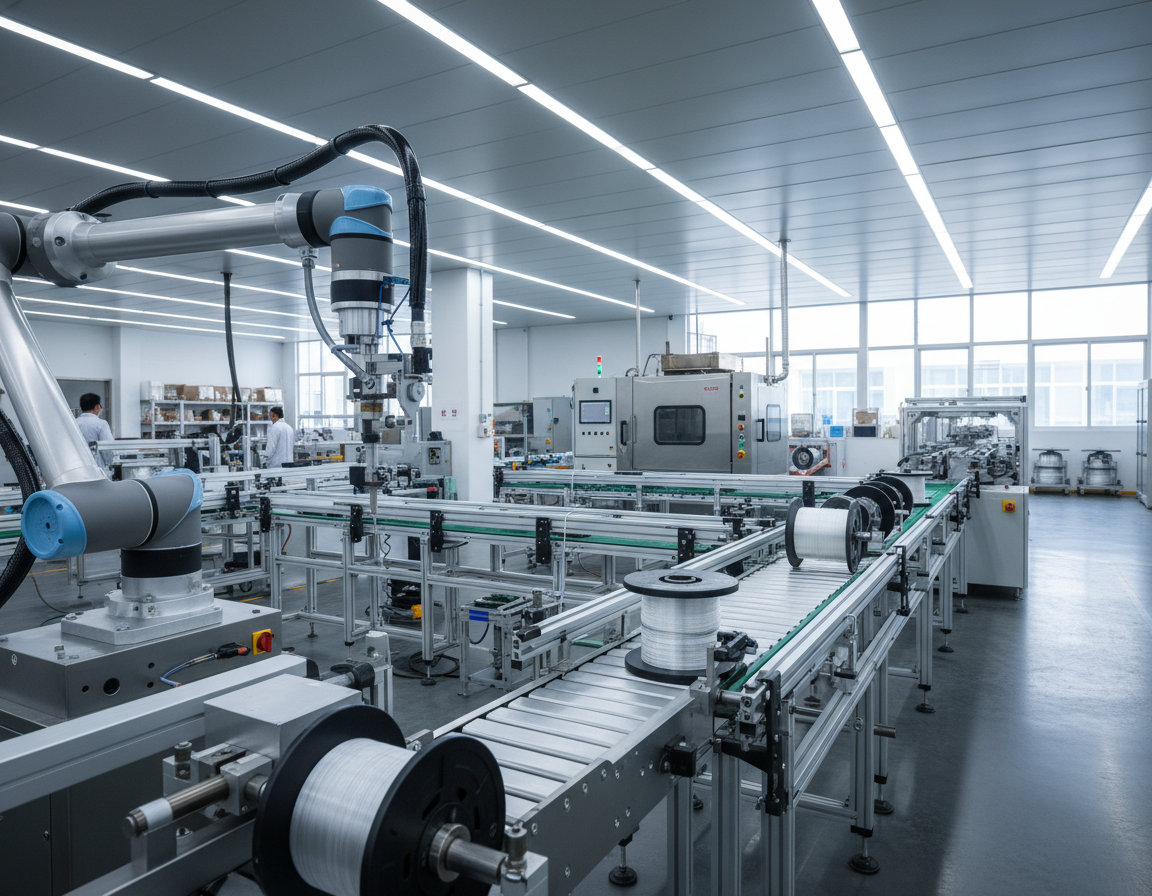
Shanghai Weiye Optic Fiber Communication Equipment Co (www.weiye-ofc.com) delivers automated FTTH cable manufacturing line systems for the U.S. market market. Their turnkey FTTH Cable Production Line for High-Speed Fiber Optics combines machines and control systems. This line turns out drop cables, indoor/outdoor cables, as well as high-density units for telecom, data centers, as well as LANs.

This advanced FTTH cable making machinery delivers measurable business value. It offers higher throughput and consistent optical performance with low attenuation. It also complies with IEC 60794 and ITU-T G.652D / G.657 standards. Customers benefit from reduced labor costs and material waste through automation. Full delivery services cover installation and operator training.

The FTTH cable production line package features fiber draw tower integration, a fiber secondary coating line, and a fiber coloring machine. It also covers SZ stranding line, fiber ribbon line, compact fiber unit assembly, cable sheathing line, armoring modules, and testing stations. Control and power specs commonly use Siemens PLC with HMI, operating at 380 V AC ±10% and modular power consumption up to roughly 55 kW depending on configuration.

Shanghai Weiye’s customer support model offers on-site commissioning by experienced engineers, remote monitoring, together with rapid troubleshooting. The line also delivers lifetime technical support together with operator training. Clients are typically required to coordinate engineer logistics as part of standard supplier practice when ordering from FTTH cable machine suppliers.

Main Takeaways

  • FTTH production line systems meet growing U.S. demand for fiber-to-the-home deployments.
  • Turnkey systems from Shanghai Weiye combine automation, standards compliance, and operator training.
  • Modular setups use Siemens PLC + HMI and operate near 380 V AC with up to ~55 kW power profiles.
  • Combined production modules cover drawing, coating, coloring, stranding, ribbon, sheathing, armoring, and testing.
  • Modern FTTH cable manufacturing systems reduces labor, waste, and improves optical consistency.
  • Technical support includes on-site commissioning, remote diagnostics, and lifetime technical assistance.

SZ stranding lines

Understanding FTTH Cable Production Line Technology

The fiber optic cable manufacturing process for FTTH demands precise control at every stage. Manufacturers use integrated lines that combine drawing, coating, stranding, as well as sheathing. That setup boosts yield and speeds up market entry. This line serves the needs of both residential as well as enterprise deployments in the United States.

Below, we outline the core components and technologies driving modern manufacturing. Each module must operate with precise timing and reliable feedback. The choice of equipment shapes product quality, cost, and flexibility for various cable designs.

Modern Fiber Optic Cable Manufacturing Components

Secondary coating lines apply dual-layer coatings, often 250 µm, using high-speed UV curing. Tight buffering and extrusion systems produce 600–900 µm jackets for indoor and drop cables.

SZ stranding lines rely on servo-controlled pay-off as well as take-up units to handle up to 24 fibers with accurate lay length. Fiber coloring machines employ multi-channel UV curing to mark fibers to industry color codes.

Sheathing together with extrusion stations create PE, PVC, or LSZH jackets. Armoring units add steel tape or wire for outdoor protection. Cooling troughs and UV dryers stabilize profiles before testing.

Evolution From Traditional To Advanced Production Systems

Early plants used manual and semi-automatic modules. Lines were separate, featuring hand transfers together with basic controls. Current facilities shift toward PLC-controlled, synchronized systems using touchscreen HMIs.

Remote diagnostics and modular turnkey setups allow rapid changeover between simplex, duplex, ribbon, and armored formats. This move supports automated fiber optic cable production and reduces labor dependence.

Key Technologies Driving Industry Innovation

High-precision tension control, based on servo pay-off and take-up, keeps geometry stable during high-output runs. Multi-zone temperature control using Omron PID as well as precision heaters supports consistent extrusion quality.

High-speed UV curing and water cooling speed up profile stabilization while reducing energy use. Integrated inline testers measure attenuation, geometry, tensile strength, crush resistance, and aging data.

Operation Typical Equipment Advantage
Optical fiber drawing Draw tower with closed-loop tension feedback Consistent core diameter and low attenuation
Secondary coating Dual-layer UV curing coaters Uniform 250 µm coating for durability
Identification coloring Multi-channel coloring machine Reliable color identification for field work
Fiber stranding Servo-controlled SZ stranding line (up to 24 fibers) Accurate lay length across ribbon and loose tube designs
Extrusion & sheathing Multi-zone heated energy-saving extruders Precise jacket dimensions in PE, PVC, or LSZH
Protection armoring Steel tape/wire armoring units Stronger mechanical protection for outdoor applications
Cooling and curing Cooling troughs plus UV dryers Quicker profile setting with fewer defects
Inline testing Inline attenuation and geometry measurement Real-time quality control and compliance reporting

Compliance using IEC 60794 as well as ITU-T G.652D/G.657 variants is standard. Producers typically certify to ISO 9001, CE, as well as RoHS. These credentials support diverse applications, from FTTH drop cable line output to armored outdoor runs together with data center high-density solutions.

Choosing cutting-edge fiber optic production equipment and modern manufacturing equipment enables firms meet tight tolerances. That decision enables efficient automated fiber optic cable production and positions companies to deliver on scale and quality.

Essential Equipment In Fiber Secondary Coating Line Operations

The secondary coating stage is critical, giving drawn optical fiber its final diameter together with mechanical strength. This system prepares the fiber for stranding together with cabling. A well-tuned fiber secondary coating line controls coating thickness, adhesion, as well as surface quality. This line protects the glass during handling.

Producers aiming for high-yield, high-output fiber optic cable manufacturing must match material, tension, and curing systems to process requirements.

High-speed secondary coating processes rely on synchronized pay-off, coating heads, and UV ovens. Modern systems achieve high production rates while minimizing excess loss. Precise tension control at pay-off and winder stages prevents microbends and ensures consistent coating thickness across long runs.

Single and dual layer coating applications meet different market needs. Single-layer setups provide basic mechanical protection and a simple optical fiber cable production machine footprint. Dual-layer lines combine a harder inner layer with a softer outer layer to improve microbend resistance and stripability. This helps when fibers are prepared for connectorization.

Temperature control and curing systems are critical to final fiber performance. Multi-zone heaters and Omron PID controllers guide screw/barrel extruders to stable melt flow for LSZH or PVC compounds. UV curing ovens and water trough cooling stabilize the coating profile and reduce variation in excess loss; targets for high-quality single-mode fiber often aim for ≤0.2 dB/km at 1550 nm after extrusion.

Key components from trusted suppliers improve uptime and precision in an optical fiber cable production machine. Extruders such as 50×25 models, screws and barrels from Jinhu, and bearings from NSK are common. Motors from Dongguan Motor, inverters by Shenzhen Inovance, and PLC/HMI platforms from Siemens or Omron provide robust control and monitoring for continuous runs.

Operational parameters guide preventive maintenance and process tuning. Typical pay-off tension ranges from 0.4 to 1.5 N for fiber reels, while radiation and curing speeds are adjusted to material type and coating thickness. A preventive maintenance cycle around six months keeps secondary coating processes stable and supports reliable high-speed fiber optic cable production.

Fiber Draw Tower And Preform Processing

The fiber draw tower is the core of optical fiber drawing. The line softens a glass preform in a multi-zone furnace. Then, it pulls a continuous strand featuring precise diameter control. That stage sets the refractive-index profile together with attenuation targets for downstream processes.

Process control on the tower uses real-time diameter feedback and tension management. That prevents microbends. Cooling zones and closed-loop systems keep geometry stable during the optical fiber cable production process. Modern towers log metrics for traceability and rapid troubleshooting.

Output quality supports single-mode fibers such as ITU-T G.652D and bend-insensitive types like G.657A1/A2 for FTTH networks. Draws routinely meet stringent loss figures. Excess loss after coating is kept at or below 0.2 dB/km for high-performance single-mode fiber.

Integration with secondary coating lines requires careful pay-off control. A synchronized handoff preserves alignment together with tension as the fiber enters coating, coloring, or ribbon count stations. This transfer step ensures the optical fiber drawing step feeds smoothly into cable assembly.

Equipment vendors such as Shanghai Weiye offer turnkey options. These include testing stations for attenuation, tensile strength, together with geometric tolerances. Such capabilities help manufacturers scale toward fast-cycle fiber optic cable line output while maintaining ISO-level output quality checks.

System Feature Main Purpose Typical Goal
Multi-zone heating furnace Uniform preform heating for stable glass viscosity Uniform draw speed with controlled refractive profile
Live diameter control Maintain core/cladding geometry and reduce attenuation ±0.5 μm tolerance
Cooling and tension control Protect fiber strength while preventing microbends Target tension based on fiber type
Integrated automated pay-off Smooth transfer to coating and coloring Matched feed rates to avoid slip
Inline test stations Verify loss, strength, and geometry ≤0.2 dB/km loss after coating for single-mode

Advanced SZ Stranding Line Technology For Cable Assembly

The SZ stranding method creates alternating-direction lays that cut axial stiffness and boost flexibility. That makes it ideal for drop cables, building drop assemblies, and any application that needs a flexible core. Manufacturers moving toward automated fiber optic cable manufacturing use SZ approaches to meet tight bend and axial tolerance specs.

Precision in the stranding stage protects optical performance. Modern precision stranding equipment uses servo-driven carriers, rotors, and modular pay-off racks that accept up to 24 fibers. These systems deliver precise lay-length control and allow quick reconfiguration for different cable types.

Automated tension control systems keep fibers within safe limits from pay-off to take-up. Servo pay-offs, capstans, and haul-off units maintain constant linear speed and target tensions. Typical fiber pay-off tension ranges from 0.4 to 1.5 N while reinforcement pay-offs run between 5 and 20 N.

Integration with a downstream fiber cable sheathing line streamlines production and reduces handling. Extrusion of PE, PVC, or LSZH jackets at 60–150 m/min syncs with stranding through a Siemens PLC. Cooling troughs and UV dryers stabilize the jacket profile right after extrusion to prevent ovality and reduce mechanical stress.

Optional reinforcement and armoring modules add strength without compromising flexibility. Reinforcement pay-off racks accept steel wires or FRP rods. Armoring units wrap steel tape or wire with adjustable tension to meet specific mechanical ratings.

Built-in output quality control prevents defects before cables leave the line. In-line geometry checks, fiber strain monitors, as well as optical attenuation measurement detect excess loss or mechanical strain caused by stranding or sheathing. These checks support continuous automated fiber optic cable manufacturing workflows together with cut rework.

The combination of a robust sz stranding line, high-end precision stranding equipment, as well as a synchronized fiber cable sheathing line offers a scalable solution for manufacturers. That setup raises throughput while protecting optical integrity as well as mechanical performance in finished cables.

Fiber Coloring Machines And Identification Systems

Coloring and identification are critical in fiber optic cable line output. Accurate color application minimizes splicing errors and accelerates field work. Current equipment combines fast coloring using inline inspection, ensuring high throughput as well as low defect rates.

Today’s high-speed coloring technology supports multiple channels and quick curing. Machines can operate 8 to 12 color channels simultaneously, aligning with secondary coating lines. UV curing at speeds over 1500 m/min ensures color and adhesion stability for both ribbon and counted fibers.

The following sections discuss standards as well as coding prevalent in telecom networks.

Color coding adheres to international telecom standards for 12-color cycles and ribbon schemes. This compliance aids technicians in installation and troubleshooting. Consistent coding significantly reduces field faults and accelerates network deployment.

Quality control integrates advanced fiber identification systems into production lines. In-line cameras, spectrometers, and sensors detect color discrepancies, poor saturation, and coating flaws. The PLC/HMI interface alerts to issues and can pause the line for correction, safeguarding downstream processes.

Machine specifications are vital for uninterrupted runs and material compatibility. Leading equipment accepts UV-curable pigments together with inks, compatible using common coatings as well as extrusion steps. Pay-off reels accommodating 25 km or 50 km spools ensure continuous operation on high-volume lines.

Supplier support is essential for US manufacturers adopting these technologies. Shanghai Weiye as well as other established vendors offer customizable channels, remote diagnostics, and onsite training. That support model reduces ramp-up time as well as enhances the reliability of fiber optic cable line output equipment.

Specialized Solutions For Fibers In Metal Tube Production

Metal tube as well as metal-armored cable assemblies provide robust protection for fiber lines. They are ideal for direct-buried and industrial applications. This controlled routing of coated fibers into metal tubes prevents microbends, ensuring optical performance remains within specifications.

Processes depend on precision filling and centering units. These modules, in conjunction with fiber optic cable manufacturing equipment, ensure concentric placement and controlled tension during insertion.

Armoring steps involve the use of steel tape or wire units with adjustable tension and wrapping geometry. This process benefits armored fiber cable production by preventing compression of fiber elements. It also keeps reinforcement wires at typical diameters of ø0.4–ø1.0 mm.

Coupling armoring with downstream sheathing as well as extrusion lines results in a finished outer jacket made of PE, PVC, or LSZH. An optical fiber cable manufacturing machine must handle pay-off reels sized for reinforcement as well as align with sheathing tolerances.

Quality checks include crush, tensile, and aging tests to confirm the armor does not exceed allowable stress on fibers. Standards-based testing supports long-term reliability in field conditions.

Turnkey solutions from established manufacturers integrate metal tube handling using SZ stranding as well as sheathing lines. These solutions include operator training together with maintenance schedules to sustain throughput on fiber optic cable manufacturing equipment.

Buyers should consider compatibility featuring armored fiber cable production modules, ease of changeover, as well as service support for field upgrades. These factors reduce downtime and protect investment in an optical fiber cable production machine.

Fiber Ribbon And Compact Fiber Unit Manufacturing

Modern data networks require efficient assemblies that pack more fibers into less space. Cable makers employ a fiber ribbon line to create flat ribbon assemblies for rapid splicing. That line output method uses parallel processes together with precise geometry to meet the needs of MPO trunking and backbone cabling.

Advanced equipment helps ensure accuracy and speed in production. A fiber ribbone line typically integrates automated alignment, epoxy bonding, precise curing, as well as shear/stacking modules. In-line attenuation as well as geometry testing reduce rework, maintaining high yields.

Compact fiber unit line output focuses on tight tolerances as well as material choice. Extrusion as well as buffering create compact fiber unit constructions featuring typical tube diameters from 1.2 to 6.0 mm. Common materials include PBT, PP, together with LSZH for durability and flame performance.

High-density cable solutions aim to enhance rack together with tray efficiency in data centers. By increasing fiber count per unit area, these designs shrink cable diameter as well as simplify routing. They are compatible featuring MPO trunking and high-count backbone systems.

Production controls and speeds are critical for throughput. Advanced lines can reach up to 800 m/min, depending on configuration. PLC and HMI touch-screen control enable quick parameter changes and synchronization across multiple lines.

Quality together with customization remain key differentiators for manufacturers like Shanghai Weiye. Electronic monitoring, customizable ribbon counts, stacking patterns, as well as turnkey integration using sheathing and testing stations support bespoke high-output fiber cable line output line requirements.

Key Feature Ribbon Line Compact Fiber System Data Center Benefit
Typical Speed As high as 800 m/min Around 600–800 m/min Greater throughput for large-scale deployments
Key Processes Automated alignment, bonding, and curing Buffering, extrusion, and precision winding Consistent geometry and lower insertion loss
Material set Specialty tapes and bonding resins PBT, PP, LSZH jackets and buffers Long service life with compliance benefits
Inspection Inline attenuation and geometry checks Precision dimensional control with tension monitoring Lower failure rates and faster rollout
Integration Integrated sheathing with splice-ready stacking Modular units for high-density cable solutions More efficient MPO trunk and backbone deployment

Optimizing High-Speed Internet Cable Production

Efficient fast-cycle fiber optic cable production relies on precise line setup and strict process control. To meet US market demands, manufacturers must adjust pay-off reels, extrusion dies, and tension systems. That ensures optimal output for flat, round, simplex, as well as duplex FTTH profiles.

FTTH Application Cabling Systems

FTTH cabling systems must accommodate various drop cable types while maintaining consistent center heights, like 1000 mm. Production lines for FTTH include 2- and 4-reel pay-off options. They also feature reinforcement pay-off heads for enhanced strength.

Extruder models, such as a 50×25, control jacket speeds between 100 and 150 m/min, depending on LSZH or PVC. Extrusion dies for 2.0×3.0 mm profiles guarantee reliable jackets for field installation.

Quality Assurance In The Fiber Pulling Process

Servo-controlled pay-off together with take-up units regulate fiber tension between 0.4–1.5 N to prevent excess loss. Inline systems conduct fiber pull testing, attenuation checks, mechanical tensile tests, as well as crush as well as aging cycles. These tests verify performance.

Key control components include Siemens PLCs and Omron PID controllers. Motors from Dongguan Motor and inverters from Shenzhen Inovance ensure stable operation and easier maintenance.

Meeting Optical Fiber Drawing Industry Standards

A well-tuned fiber draw tower produces fibers that meet ITU-T G.652D and G.657 standards. The goal is to achieve ≤0.2 dB/km excess loss at 1550 nm for high-consistency single-mode fiber.

Choosing the best equipment for FTTH cables involves evaluating speed, customization, warranty, and local after-sales support. Top FTTH cable production line manufacturers provide turnkey layouts, remote monitoring, and operator training. This reduces ramp-up time for US customers.

Conclusion

Advanced FTTH cable making machinery integrates various components. These include fiber draw towers, secondary coating, coloring lines, SZ stranding, and ribbon units. It also includes sheathing, armoring, and automated testing for consistent high-speed fiber production. A complete fiber optic cable production line is designed for FTTH and data center markets. It enhances throughput, keeps losses low, and maintains tight tolerances.

For United States manufacturers together with system integrators, partnering with reputable suppliers is key. They should offer turnkey systems with Siemens or Omron-based controls. That contains on-site commissioning, remote diagnostics, together with lifetime technical support. Companies like Shanghai Weiye Optic Fiber Communication Equipment Co provide integrated solutions. Such solutions simplify automated fiber optic cable manufacturing together with reduce time to manufacturing.

Technically, ensure line configurations adhere to IEC 60794 and ITU-T G.652D/G.657 standards. Verify tension and curing settings to meet excess loss targets, such as ≤0.2 dB/km at 1550 nm. Adopt preventive maintenance cycles of roughly six months for reliable 24/7 operation. When planning a new FTTH cable production line, first evaluate required cable types. Collect product drawings and standards, request detailed equipment specs and turnkey proposals, and schedule engineer commissioning and operator training.